What is a nut, how many types and how are they different from a screw?
A nut is a type of fastening device that consists of a nut head. (female nut) and male nut (cylindrical body with thread), but most people call it a screw with a male nut and female nut as a nut and this misunderstanding Has become a real name, such as a hexagon head screw. Although the default name is Hex bolt, each has its own characteristics. and methods of use are not the same In order to have a proper understanding, let's get to know the name. that depend on each type of usage or want to buy products can go here see more products

Male Nuts (Bolts)
Used to hold two materials together by a male nut acting as a stick inserted into the material. with a bolt head as a receiver from the other side

Nut or female nut (Nuts)
Used to attach to the male nut.

Screws or screws (Screws)
Use a screwdriver to rotate and hold two objects together by themselves.
Type of Bolts

Used in the construction industry to anchor structural components to concrete slabs or foundations.

For structural applications where access is restricted to one side. cause the lock to remain complete

A stud nut or threaded stud has threads on both sides. Used to fasten workpieces with internal threads on both sides together. Or use with work that has a through hole and then use a screw head to tighten it together and help prevent sliding.

A self-locking bolt with a domed head and a square bottom. Mainly used with hinges and locks to provide a level of security. It can be removed from the nut side of the bolt.

Used for lifting work Some are designed for heavy loads while others are intended for non-load applications.

Featured with a hexagonal head, there are many types of hex nuts, commonly used in machinery and construction. and have full or partial threads

Acts as a shaft that can hold rotating parts such as bearings (bearings). Also called shoulder screws and bolts.

Used for holding, holding, hanging or clamping pipes. Compatible with plates and female nuts.

They are also called anchor bolts and are commonly used in structural applications such as roofing and securing walls to concrete foundations.

Set the flange to act as a washer to distribute the load. Used for connecting pipes Car transmissions, engines and other mechanical applications
Type of Nuts

Protect the bottom nut make it look clean and can prevent skin and clothing from hitting sharp edges

The side wings make it quick and easy to tighten and remove by hand.

A low-profile nut that, when attached to a standard nut, will help prevent relaxation Used when standard nuts do not fit.

Flanges are intended for use with washers. It distributes the weight evenly around the ring.

Used for connecting bolts together.

There is a nylon band inserted at the thread of the nut. Once tightened, these nylons are firmly attached to the thread. This results in better grip and reduces the likelihood of loosening due to vibration.

Its shape increases the contact surface with the material. This reduces the chance that it will loosen. Usually used with square head bolts.

Different types of hexagon nuts provides a reliable hold Easy to tighten and loosen due to its shape. Used in applications in all industries. From vehicles to machines

For holding soft materials such as wood or plastic. a flange that has a spine on one side

Secure with pins or barbed wire to prevent rotation. Often used in continuous vibration applications.

The attached free-rotating notched ring creates tension on the surface of the material. Note: over-tightening the nut will damage the nut.
How many types of screws are there?
If you try a Google search, most of the time Many places will write that there are about 20-30 types of screws and sometimes also explain in depth the classification by screw head type. in fact Screws are divided into 12 broad categories, which should not be categorized by size, material, or head type. That's not a significant division.
Type of Screws

Wood screws are often made of bronze, brass, or steel, and are usually used specifically for wood.

Often used to drill drywall. The screw can cut through the drywall at Mute the light wall without damage

Self-drilling screws are screws that are used to attach to steel or wooden frames without pre-drilling. Can be drilled in one go

Metal sheet screws are screws that are specially designed for drilling metal sheets (Metal Sheet), so it is suitable for installing roofs, wall drilling, various covers, louvre legs and connectors.

This type of screw is designed to have a large screw thread. and made of high-quality steel that is solid Screws can be tightened with a screwdriver or wrench without the need to install any anchors. Because of the screw thread that is hard and specially designed to go through the concrete

Plywood screws are extremely durable screws. MDF is harder than hardwood and difficult to drill. Using plain wood screws with MDF often results in splitting. Unless you drill pilot holes and use regular wood screws. Plywood screws eliminate the need for pilot drilling.
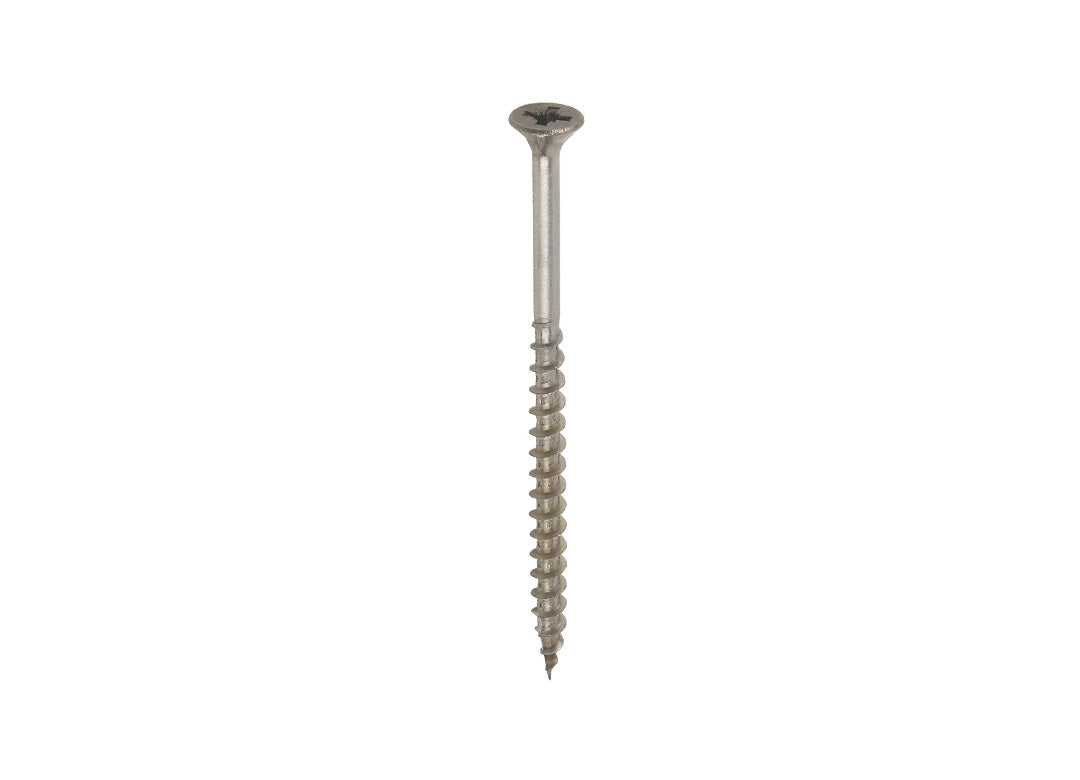
This screw is designed for use with a countersink. It will be mounted flush or slightly below the surface of the wood. with coarse threads and a smooth top handle And it's designed to resist corrosion and rust.

It is designed to hold or join two pieces of wood. which makes it suitable for making furniture

glass float pin is a screw that helps to fix the mirror to the wall without the need for additional brackets. Mirror screws have a slotted socket head with tapped holes. This makes it possible to tighten the included cover. Easy to install and stylish decoration.

It is a screw used to hold the clipboard to the clipboard together or the clipboard to other materials such as natural wood, furniture. The form consists of the customer himself. or shelf Easy to use, does not require special equipment to install.

The anti-theft screw head is designed to be not like a normal screw head. Makes it impossible to use a general screwdriver to solve.

It is a screw with rounded head and strong construction, durable and long-lasting. Can be hammered to quickly screw in.
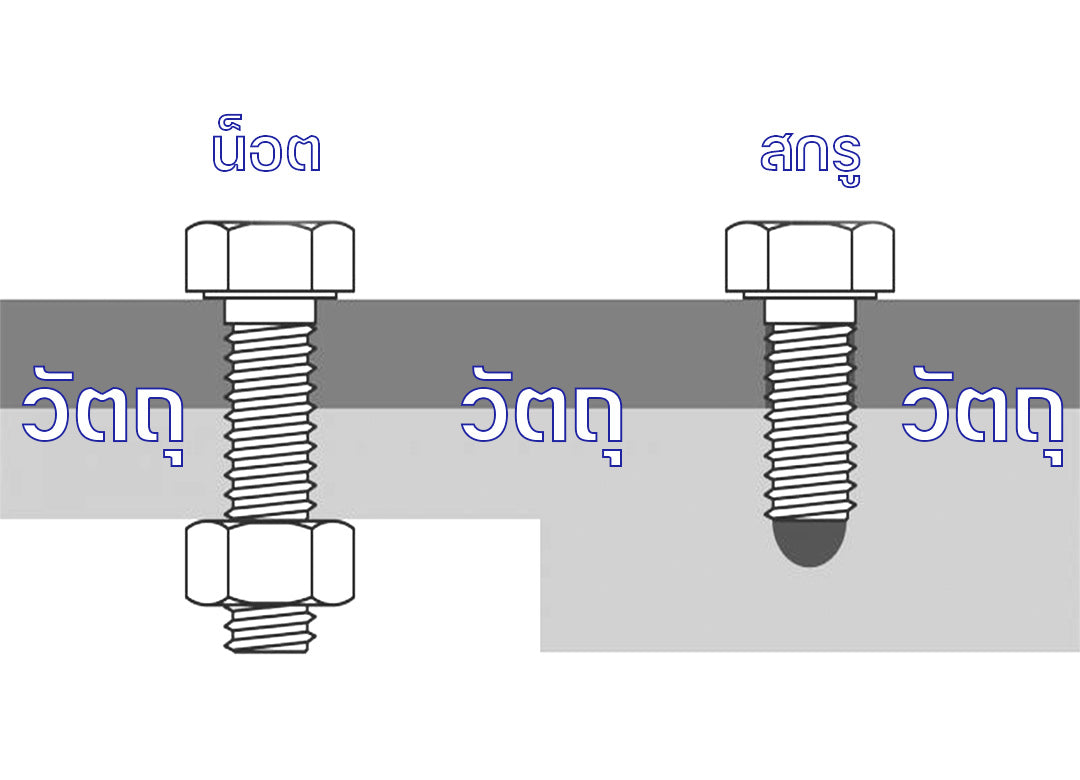
What is the difference between nut and screw?
A nut is a fastener that uses a nut washer and nut to hold objects together. which is often used with non-threaded objects Instead, the screw will be attached to the thread of the existing material or create the thread itself in the gauge when the drill is rotated.